Fire equipment for vessels
Fire equipment for vessels – sales, service and certification
Safety on board is essential for all types of vessels, and the right equipment can save lives in the event of a fire. Fire equipment for vessels provides solutions that meet strict requirements for both quality and functionality. It is important to choose equipment that is adapted to the needs of the vessel, as well as to ensure regular maintenance and certification for optimal safety at sea.

INNER RESOURCES
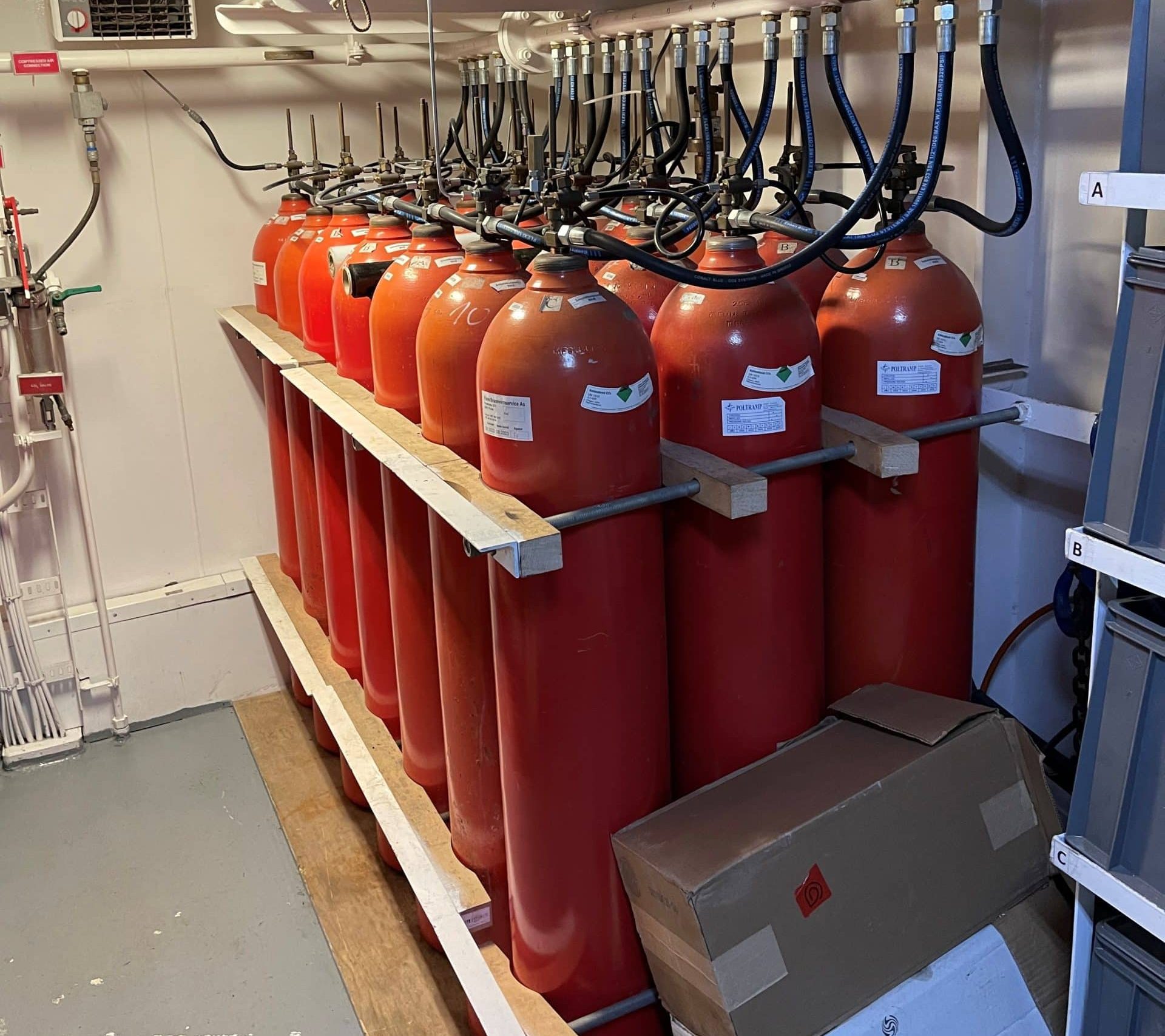
Gentle gas solution. Effective fire extinguishing without harm to people, equipment or the environment – ideal for rooms with sensitive technical equipment.

POWDER SYSTEMS
Effective in industry. Fast and reliable extinguishing for areas with high fire risk – perfect for industry, warehouses and machine rooms.

WATER-BASED PLANTS
Sprinkler & water mist. Flexible solutions that provide rapid response and reduce damage – tailored to the building's needs.

FIRE HOSES AND CABINETS
Inspection and installation. Delivery, installation and inspection of equipment that ensures safe and effective fire preparedness.
Safe solutions for on-board safety
When choosing fire equipment for vessels, it is important to consider the entire safety picture. Midnor Safety not only supplies approved equipment, but also consulting, service and certification adapted to different vessel types and operating environments.
A comprehensive emergency response requires that fire equipment is combined with clear fire plans for vessels and reliable Viking safety equipment for vessels . With extensive experience, ISO certification and a focus on quality, Midnor Safety helps you with solutions that strengthen the safety of crew, passengers and vessels, both in everyday life and when it really matters.
How to choose the right fire equipment for vessels
Choosing the right fire equipment for vessels is about more than meeting legal requirements – it’s about ensuring the safety of both crew and passengers. Different vessel types and applications require customized solutions, from hand extinguishers and fire blankets to advanced extinguishing systems and smoke detectors.
It is important to map risks, assess the placement of equipment and ensure that everything is approved according to current regulations. Regular inspection and maintenance are essential to ensure that fire equipment functions optimally when needed. With the right equipment and good routines, the risk of serious incidents at sea is reduced.
Questions and answers
Yes. Midnor Safety offers authorized inspection and certification of fire extinguishers and other safety equipment on board. We ensure that everything is in proper condition and can send reminders before the next inspection.
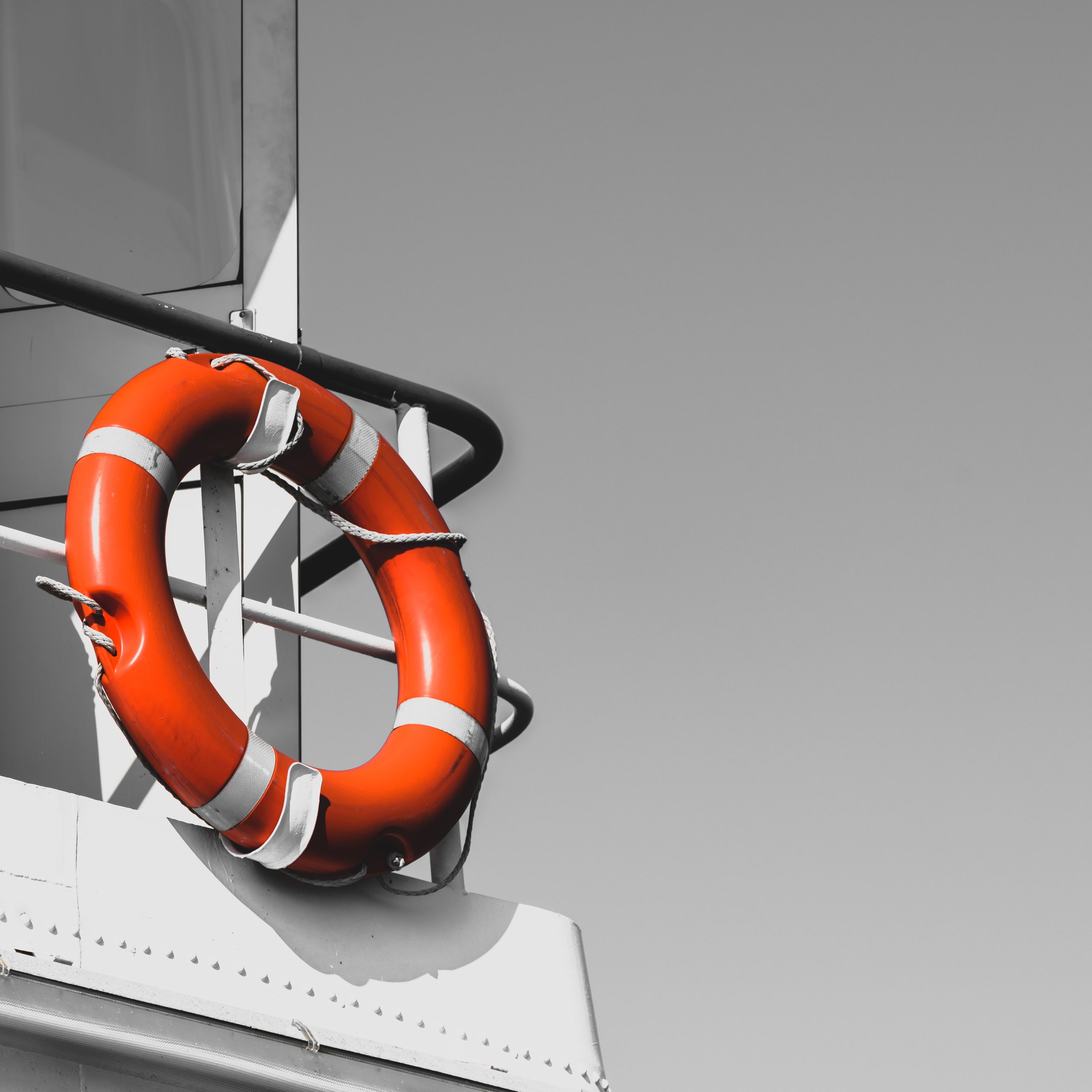
The minimum requirements include life jackets, life buoy with light, distress signal (emergency flare) and first aid equipment. We also offer escape ladders, immersion suits and survival equipment – all depending on the vessel size and sailing area.
Absolutely! We offer complete, regulatory-approved equipment packages tailored to your vessel – including fire equipment, rescue equipment and documentation. You get everything delivered, installed and ready for approval.
Vessels under 15 meters must usually have approved hand extinguishers, fire blankets, smoke detectors and emergency lights. The requirements may vary depending on the vessel type and use, but the equipment must always meet the Norwegian Maritime Authority's regulations to ensure safety on board.
Regular inspection and maintenance of fire equipment for vessels from Midnor Safety ensures that the equipment functions optimally in an emergency. It reduces the risk of serious incidents and helps meet the authorities' requirements for safety for both crew and passengers.
There are various types of fire equipment for vessels, including hand extinguishers, fire blankets, smoke detectors, emergency lights, automatic extinguishing systems, fire hoses and cabinets. The choice of equipment is tailored to the vessel's size, use and risk assessment for the best possible protection.
Certification of fire equipment for vessels involves checking and approving the equipment according to applicable regulations. This ensures that all fire equipment is in proper condition and ready for use, and that documentation required by the authorities is obtained.
Fire equipment on board vessels should be checked at least once a year, and more often during high load or demanding operations. Regular servicing of extinguishers, alarms and fixed installations ensures function, documentation and compliance with applicable requirements on board.
The right fire equipment for a vessel depends on the type of vessel, engine room, electrical installations, fuel and number of people on board. A good risk assessment makes it easier to choose the right combination of hand extinguishers, fire hoses, alarm and extinguishing system.
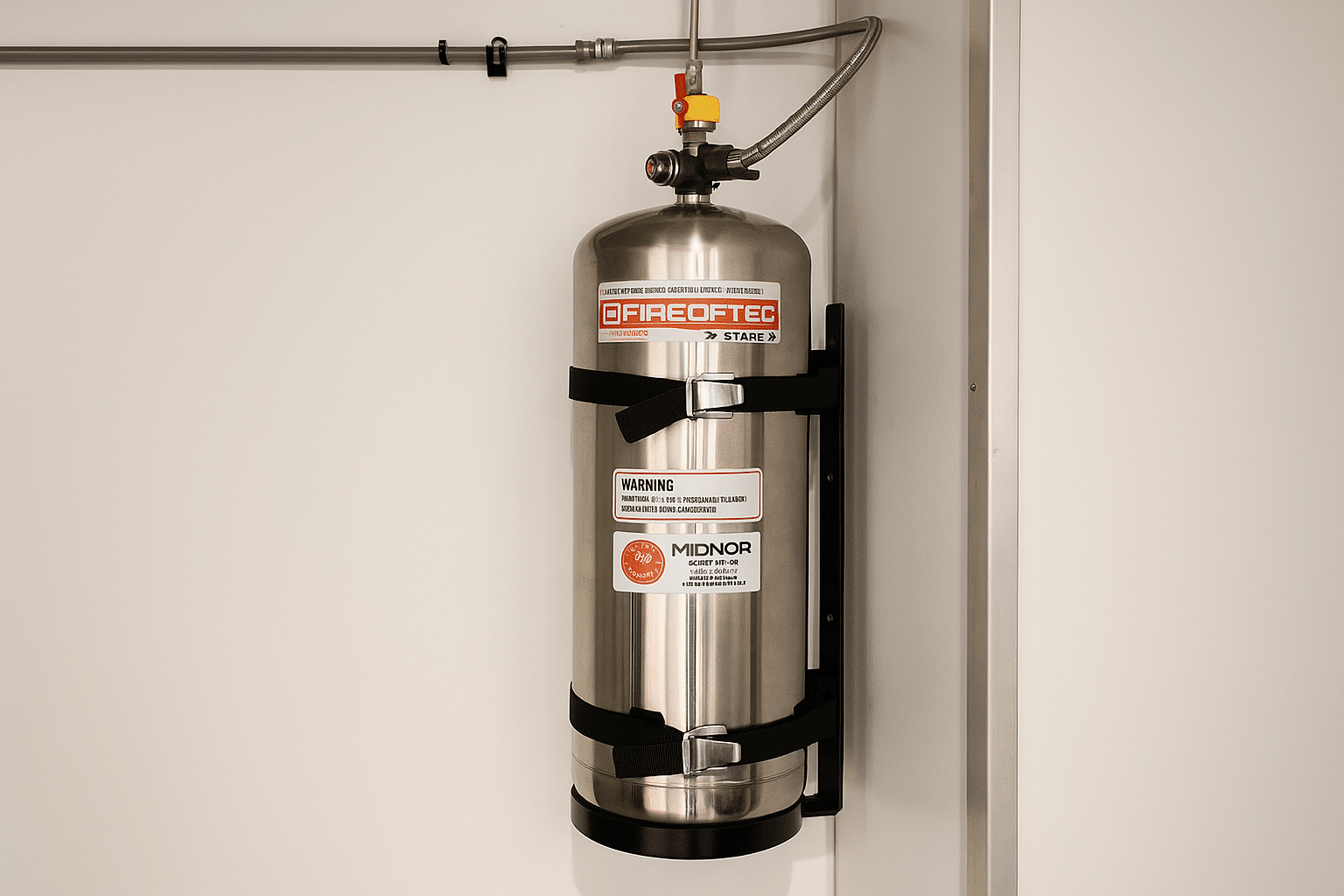
Fixed fire equipment for vessels provides automatic and rapid response to exposed areas such as engine rooms and technical rooms. It can reduce the extent of damage, protect critical equipment and provide improved fire safety on vessels with high risk or long operating times.
Summary
Fire equipment for vessels is essential for protecting crew, passengers and valuables on board. Midnor Safety supplies fire equipment for vessels, with sales, service and certification adapted to everything from smaller workboats to larger ships. We offer approved hand extinguishers, fire hoses, cabinets, smoke detectors and fixed extinguishing systems such as Inergen, powder and water-based systems. Through risk assessment, inspection and annual follow-up, we ensure that the equipment works when needed. As an ISO-certified operator, Midnor Safety helps you with regulatory solutions, documentation and safety at sea.
Ready for safety?
We tailor our fire protection and documentation services to your requirements and projects. From the first inspection to the finished report – we make it easy to be safe.
Fire equipment for vessels is crucial for the safety of crew and passengers at sea. Proper equipment and regular maintenance reduce the risk of serious incidents on board. Approved fire extinguishers, smoke detectors, fire blankets and fixed extinguishing systems must be adapted to the size and use of the vessel. Certification and annual inspection of fire equipment for vessels ensures optimal function when it really matters. Fire plans should also be prepared and training should be carried out so that everyone on board knows how to handle a fire situation. Modern fire extinguishing systems, such as automatic systems and manual extinguishing agents, provide increased safety and help meet government requirements. With extensive experience and a focus on quality, Midnor Safety delivers solutions that meet the needs of both small and large vessels, from fishing boats to larger ships.